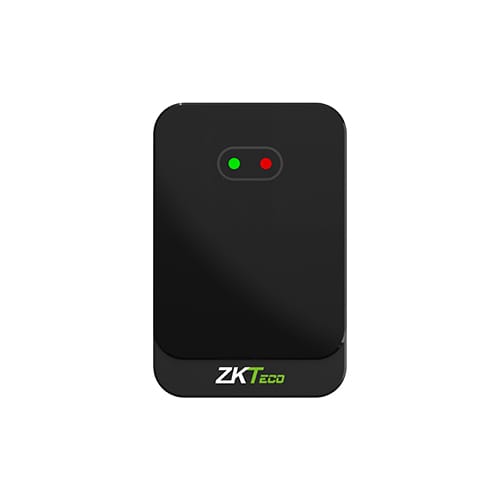
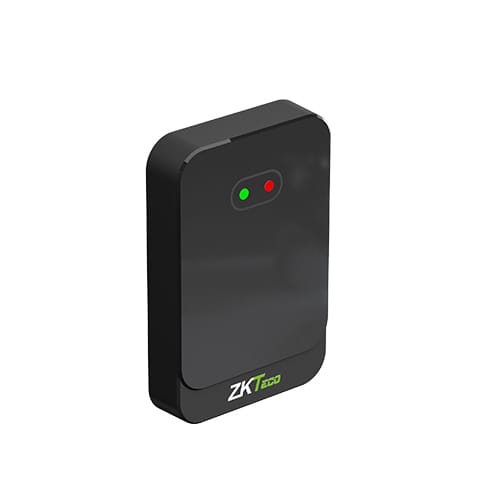
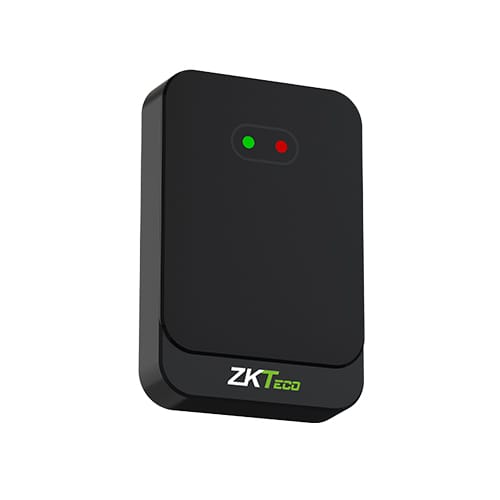
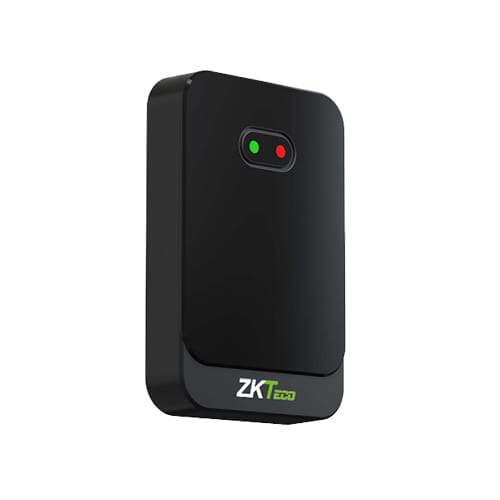
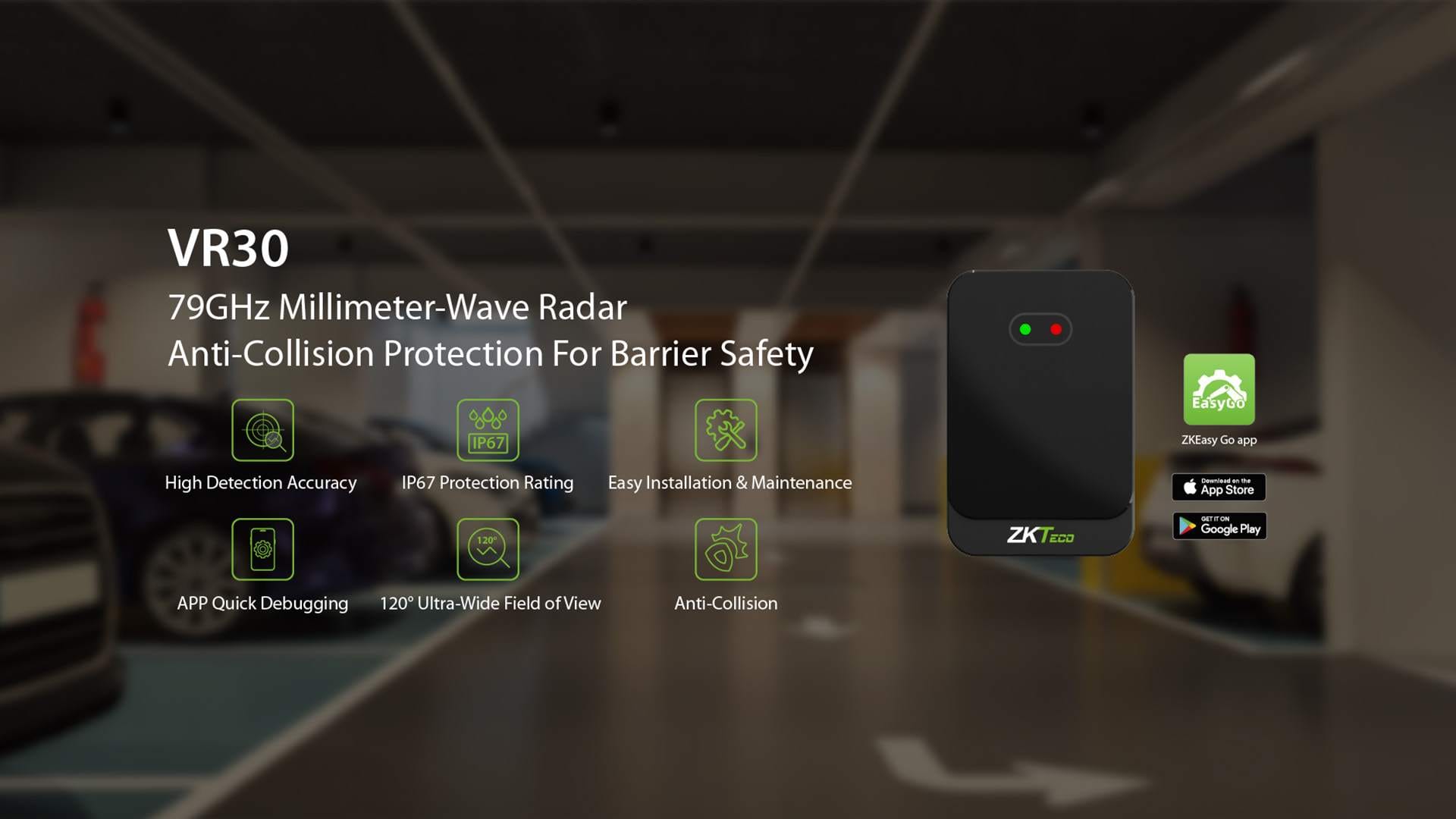
The ZKTeco VR30 is a 79GHz millimetre-wave safety radar for parking boom barriers. Detect vehicles and pedestrians within an adjustable range of up to 7m, with 120° horizontal coverage, an IP67 enclosure and ZKEasy Go app commissioning. A compact option for car parks and commercial vehicle entrances where the detection zone must suit the boom and site layout.
The ZKTeco VR30 79GHz barrier safety radar monitors the area beneath a parking boom to help reduce the risk of the arm striking a vehicle or pedestrian. It uses frequency-modulated continuous-wave (FMCW) radar and connects to the barrier control system, giving installers a detection option without cutting a vehicle loop into the pavement.
Use it when planning or upgrading a controlled car park entrance, workplace driveway, apartment vehicle entrance or other commercial boom-barrier lane. The VR30 is a detection accessory; the barrier, controller, power supply and overall safety design must be specified for the installation.
The detection range is adjustable from 0–7m for both vehicles and pedestrians. A 120° horizontal field of view provides broad coverage, while the 20° vertical field of view helps installers aim the detection zone at the required area. The maximum range is a device capability: the working distance must suit the boom length and surrounding traffic.
The user manual recommends a detection distance of 1–6m in normal installations, no greater than the boom length. Fences, walls, signs and other reflective objects can affect detection, so the detection field must be checked and commissioned on site. Changes within the detection area require recalibration.
Technicians can configure and debug the VR30 using the ZKEasy Go app over Bluetooth. The supported phone platforms are iOS 12 or later and Android 10 or later. Bluetooth and RS485 support online debugging and upgrading.
Commissioning includes selecting the boom type, boom length and left- or right-side mounting position, followed by background learning. The manual also describes pedestrian/vehicle distinction, relay behaviour and detection-area settings. Confirm the selected pedestrian trigger mode during testing, since the configuration affects when a person is detected. Run background learning again after changing the boom type, length or mounting mode.
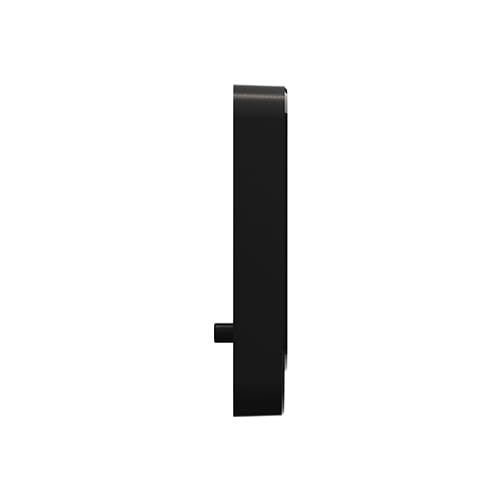
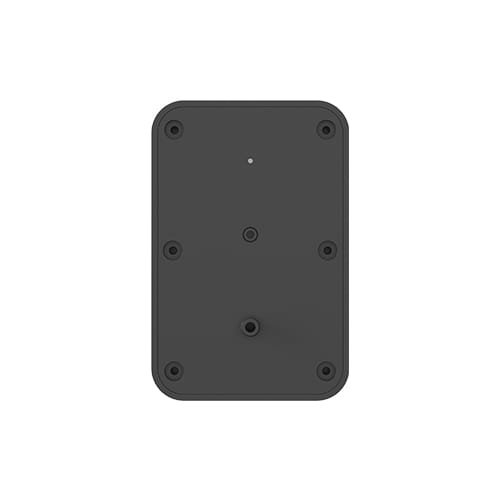
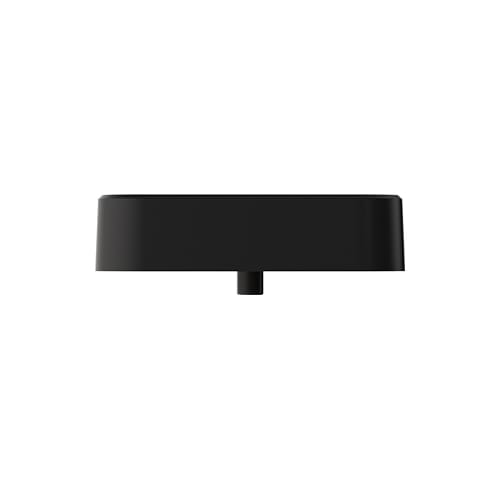
The 118 × 78 × 19mm housing fits beside the barrier arm and weighs 197g. It has an IP67 ingress protection rating and an operating temperature range of -40°C to 85°C. Keep the radar face clean and unobstructed, and select the installation position to suit the real environment.
The VR30 operates from 12V DC and consumes no more than 1.3W. The installation drawing specifies an independent 12V supply; confirm the supply and wiring against the exact barrier manual. The radar manual recommends an external 12V, 1A adaptor if the red indicator flashes when powered from a gate control board.
The user manual includes connection examples for PB4000, CMP200, BGM and ProBG series barriers. Use the correct model-specific wiring diagram and terminal definitions rather than assuming every control board is identical. Explore our vehicle barriers, including the ProBG8000 Series servo barrier and BGM2000 Series boom barrier, when specifying the complete entrance.
For small cars, the manual specifies mounting 650–700mm above the driveway. Larger vehicles may require two radars at different heights; the manual recommends dual-radar arrangements for vehicles such as semi-trailers, cement tankers and cranes. The VR30 is not applicable to sliding or telescopic gates. Site layout, pedestrian routes and the full barrier safety arrangement need to be assessed during installation.
Ask NZTeco for a VR30 quote with your barrier model, boom type and length, lane dimensions, vehicle types and site photos. These details help establish the appropriate detection arrangement and integration requirements.
| Model | VR30 |
|---|---|
| Product type | 79GHz millimetre-wave parking barrier safety radar |
| Operating frequency | 79GHz |
| Modulation mode | FMCW |
| Antenna MIMO | 2T3R |
| Transmitting power | 10dBm |
| EIRP | 24dBm |
| Antenna gain | 14dbi |
| Azimuth field of view | ±60° (120° total) |
| Vertical field of view | Elevation ±10° (20° total) |
| Maximum detection distance | 0–7m adjustable, same for vehicle and pedestrian |
| Operating temperature | -40°C to 85°C |
| Operating voltage | DC 12V |
| Power consumption | ≤1.3W |
| Net weight | 197g |
| Product dimensions (L × W × H) | 118 × 78 × 19mm |
| Package dimensions (L × W × H) | 133 × 90 × 37mm |
| Online debugging / upgrading | Bluetooth, RS485 |
| Commissioning app | ZKEasy Go; iOS 12+ / Android 10+ |
| Ingress protection | IP67 |
| Manufacturer-listed certification | CE |
| Gate application limitation | Not applicable to sliding gates or telescopic gates |
| Mounting guidance | Small cars: 650–700mm above driveway; large-vehicle layouts may require two radars |

We’re a Licensed Security Company!
NZTeco Limited is officially licensed under the Private Security Personnel Licensing Authority (PSPLA).
License Number: 24-121944
License Classes: Security Technician & Security Consultant
Expiry Date: 22-11-2029
What does this mean?
It confirms that we meet the legal standards to provide professional and secure services in New Zealand, ensuring your peace of mind and trust in our solutions.
Being licensed ensures compliance with industry regulations, ethical practices, and accountability in delivering Access Control, CCTV, and other security solutions.
For more about the PSPLA and why choosing a licensed provider matters, visit the official PSPLA information page: https://www.pspla.govt.nz/ (opens in a new tab).