
ZKTeco’s Certus Cloud Access Control Wins 2026 Secure Campus Award
Overview: ZKTeco USA’s Certus cloud access control platform has received a 2026 Secure Campus Award. We look at the capabilities recogn...

Discover how turnstile access control solutions can enhance construction site security and efficiency. Improve safety and manage site access with advanced turnstile systems.

Construction sites are difficult to secure. The site changes shape as the project progresses, subcontractors and visitors come and go, valuable tools and materials stay on site overnight, and both pedestrians and vehicles still need to move efficiently.
Good construction site security therefore needs to do more than deter theft after hours.
It should help control who enters the site, where they enter, when they enter, and what happens around those access points.
For commercial, civil and infrastructure projects, that usually means combining perimeter security with electronic access control systems, turnstiles, CCTV and controlled vehicle entry.
The right setup depends on the size of the project, workforce numbers, site layout, available power and network infrastructure, and whether the equipment needs to move to another site once the project finishes.
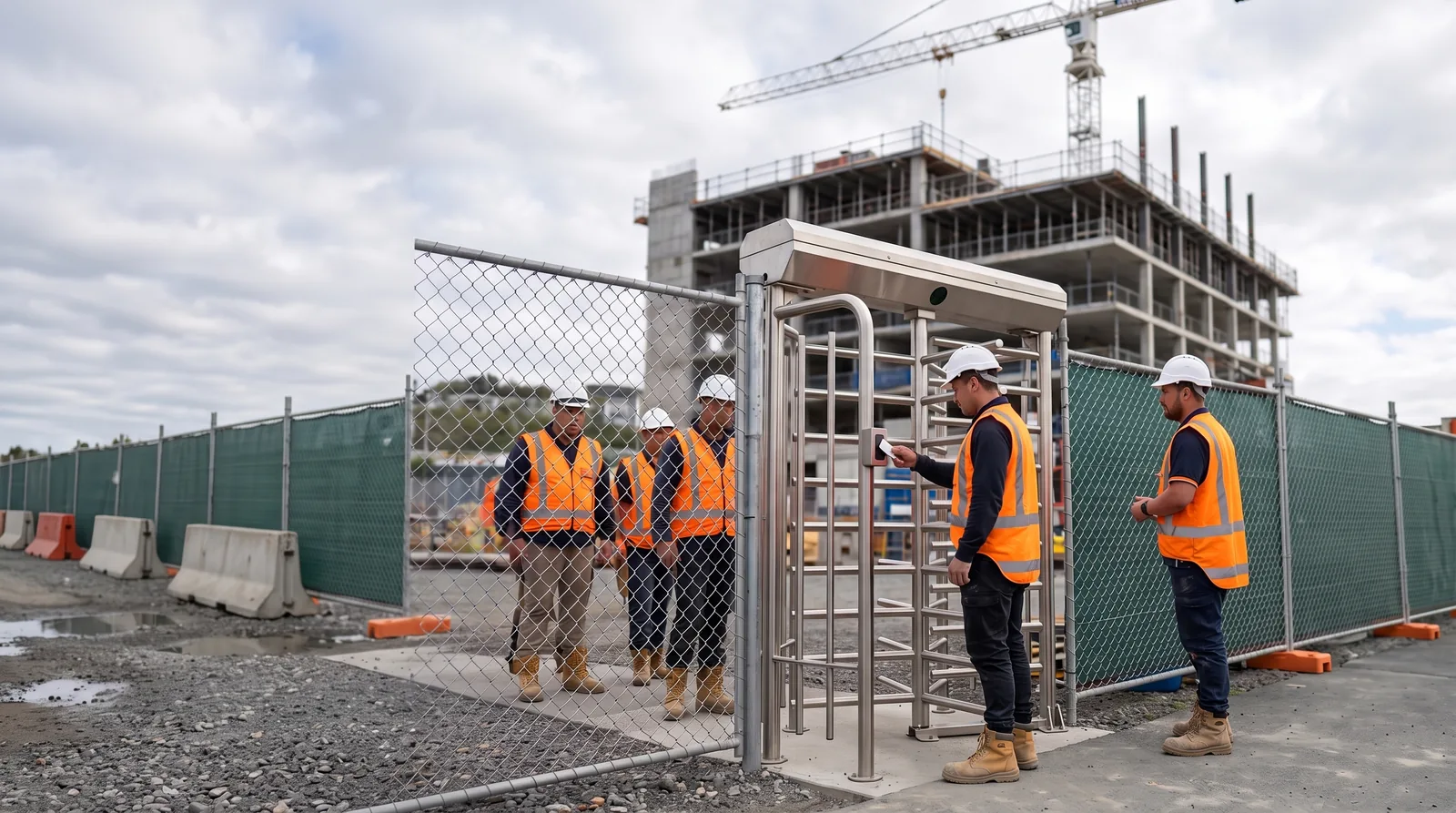
Construction sites contain hazards that members of the public, unauthorised visitors, and even workers without the correct site induction should not be exposed to.
WorkSafe New Zealand guidance asks businesses to consider unauthorised access, supervision of visitors, pedestrian and vehicle movements, and physical controls such as fencing and lockable gates when planning site security and access.
A turnstile is not a legal requirement in itself. It is one practical way of creating a controlled pedestrian entry point where the risk, workforce size and site layout justify it.
Electronic access control then determines who is authorised to pass through that entry point.
The strongest construction site security normally combines several controls rather than relying on one piece of equipment.
| Site risk | Typical security layer |
|---|---|
| Unauthorised pedestrian entry | Fencing, controlled gates and access-controlled turnstiles |
| Theft and vandalism | CCTV covering entrances, compounds and high-value areas |
| Uncontrolled vehicle entry | Vehicle barriers, UHF tags or ANPR |
| Contractors entering restricted areas | Electronic access permissions |
| Poor visibility of site movements | Access event logs and reporting |
| Staff clocking and workforce records | Integrated time and attendance where required |
The aim is not to add technology everywhere. It is to identify the site's weak points and control the areas that actually matter.
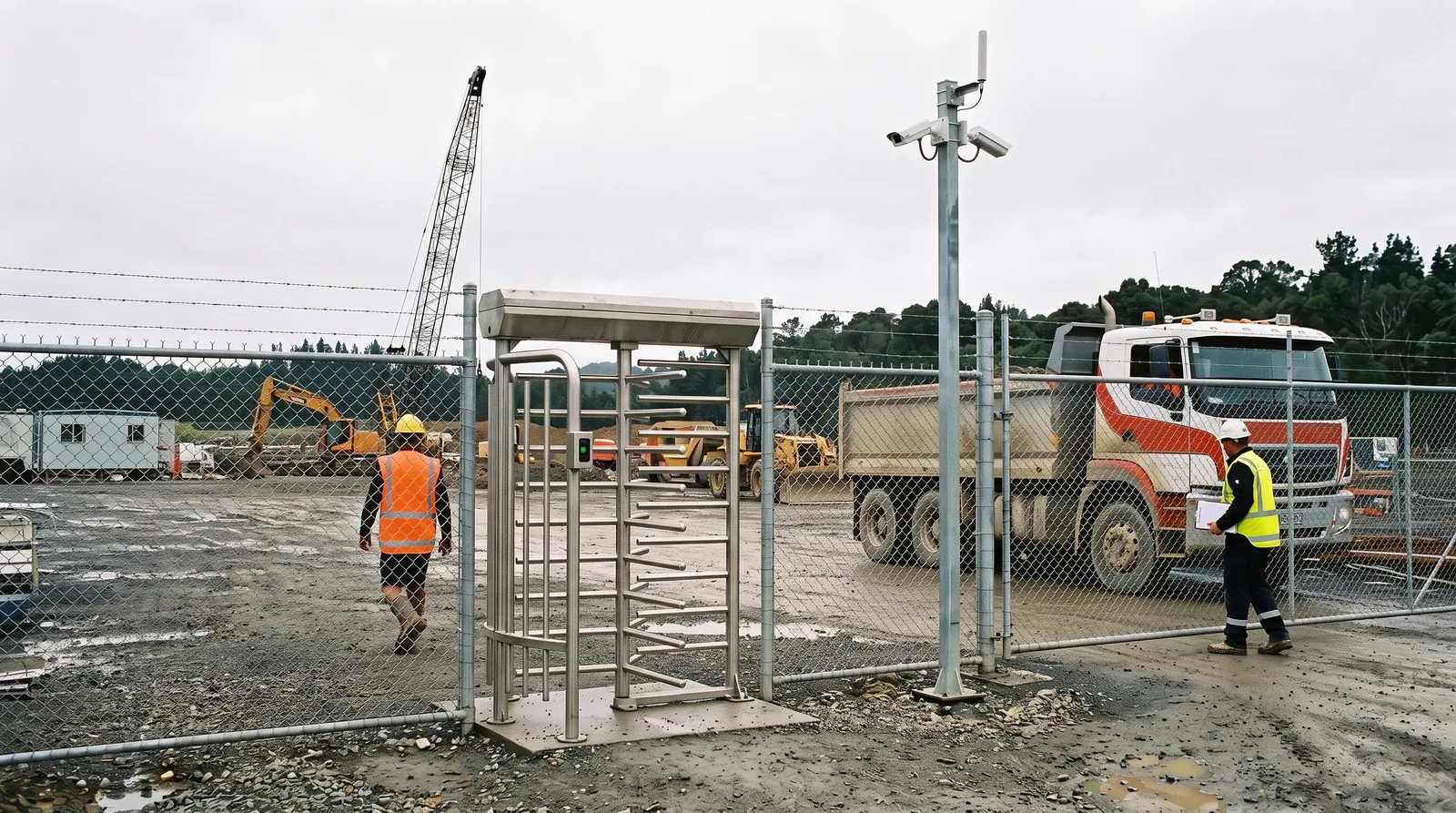
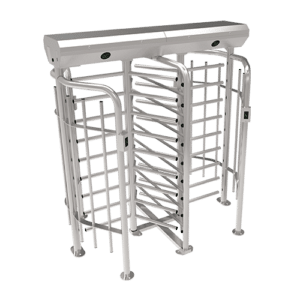
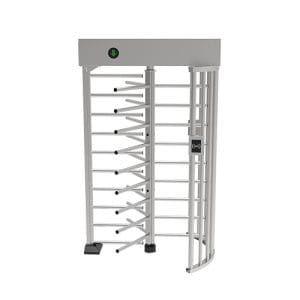
For high-security pedestrian entrances, full-height turnstiles are usually the strongest turnstile option.
Unlike a waist-height tripod turnstile, the full-height structure forms part of the physical perimeter. That makes it considerably harder to simply walk around or step over the controlled entry point.
A full-height turnstile can be connected to an access control system so the rotor only releases once a valid credential is presented.
Depending on the system, that credential could be:
The credential should be chosen around actual site conditions, workforce size, PPE requirements, privacy considerations, and the way contractors are managed.
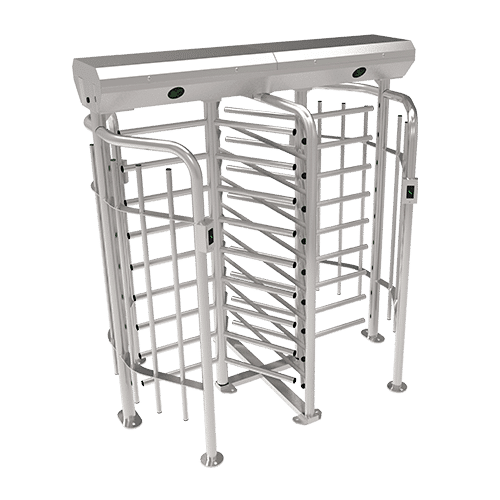
The ZKTeco FHT2300 is one example suited to secure pedestrian entry points. It is a full-height stainless-steel turnstile that can integrate with ZKTeco or third-party access control systems.
As standard, the FHT2300 is built from SUS304 stainless steel. It is IP54 rated, supports bi-directional operation, and can be configured with different readers and controllers depending on project requirements.
For exposed construction environments, the installation still needs to be planned properly around weather protection, drainage, electrical supply and the surrounding site perimeter.
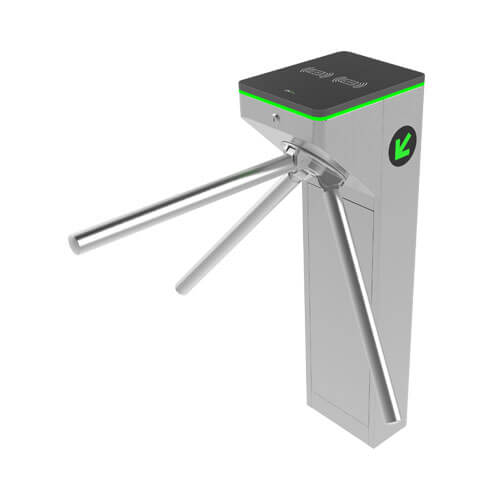
Tripod turnstiles work well where the objective is controlled pedestrian flow rather than a high-security perimeter.
They may suit:
For an exposed perimeter where preventing people from bypassing the entrance matters, a full-height solution will generally give stronger physical control.

Construction projects are temporary by nature, so permanent civil works are not always the right answer.
Turnstiles can also be configured as portable or relocatable site access solutions, including installations on suitable platforms or within modular structures.
This allows an access point to be deployed for a project and potentially relocated later, rather than designing every component as a permanent installation.
The best approach depends on the turnstile, site conditions, electrical installation and expected project duration.
There is no single credential that suits every construction site.
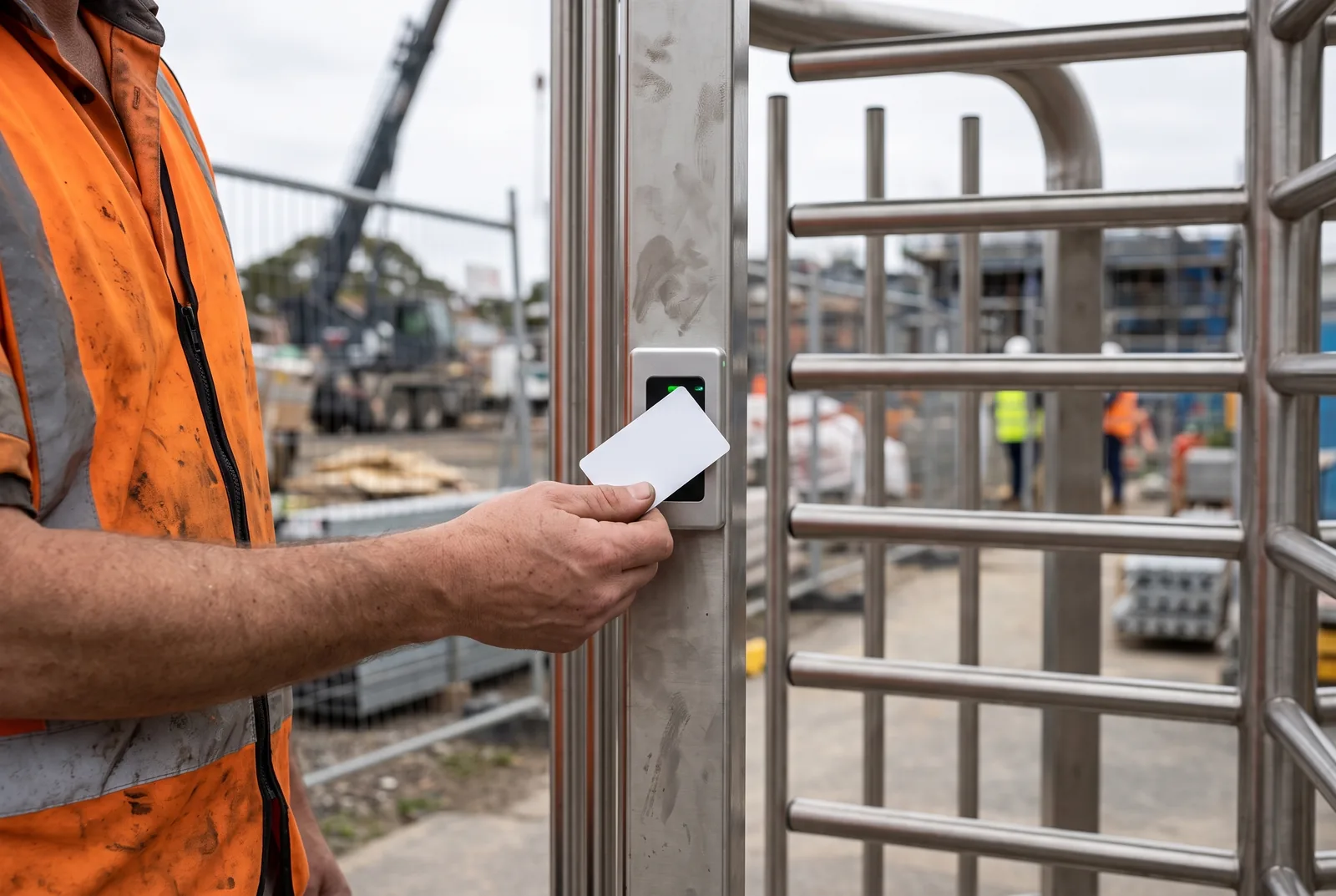
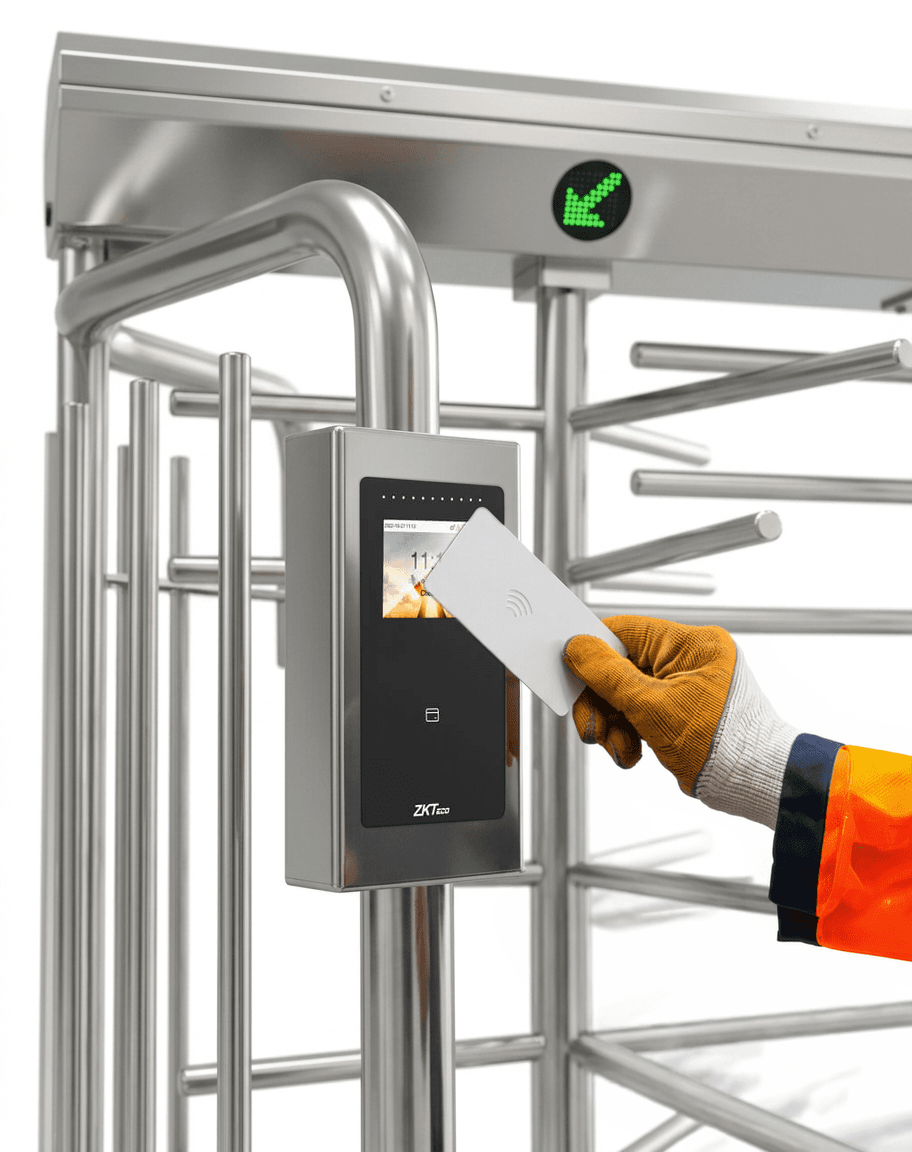
RFID is simple, familiar and fast. Cards or fobs can be issued to authorised workers and disabled when a contractor leaves the project.
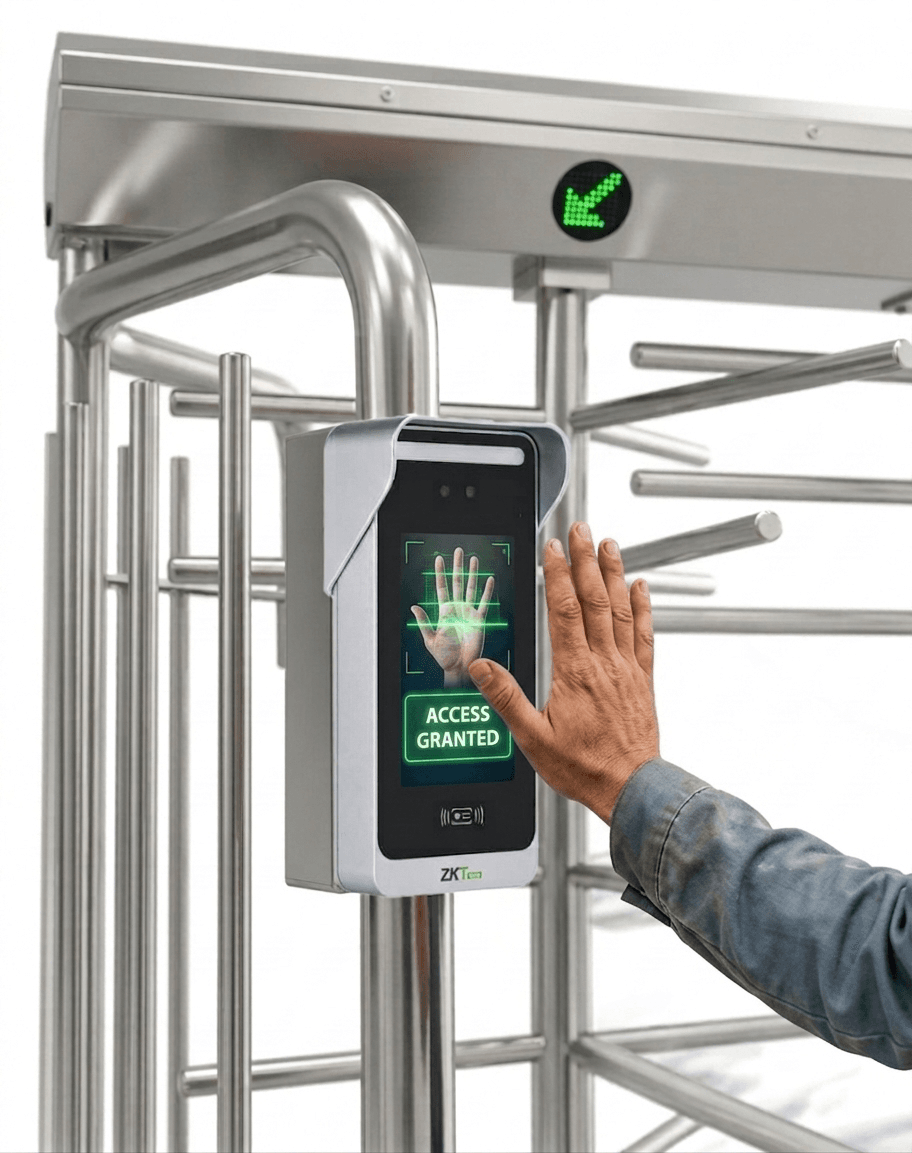
Face, palm or fingerprint recognition ties access to the enrolled person rather than a credential that could be handed to somebody else.
The technology selected should suit the physical environment and the way workers will actually interact with the terminal, including gloves, dust and weather exposure.
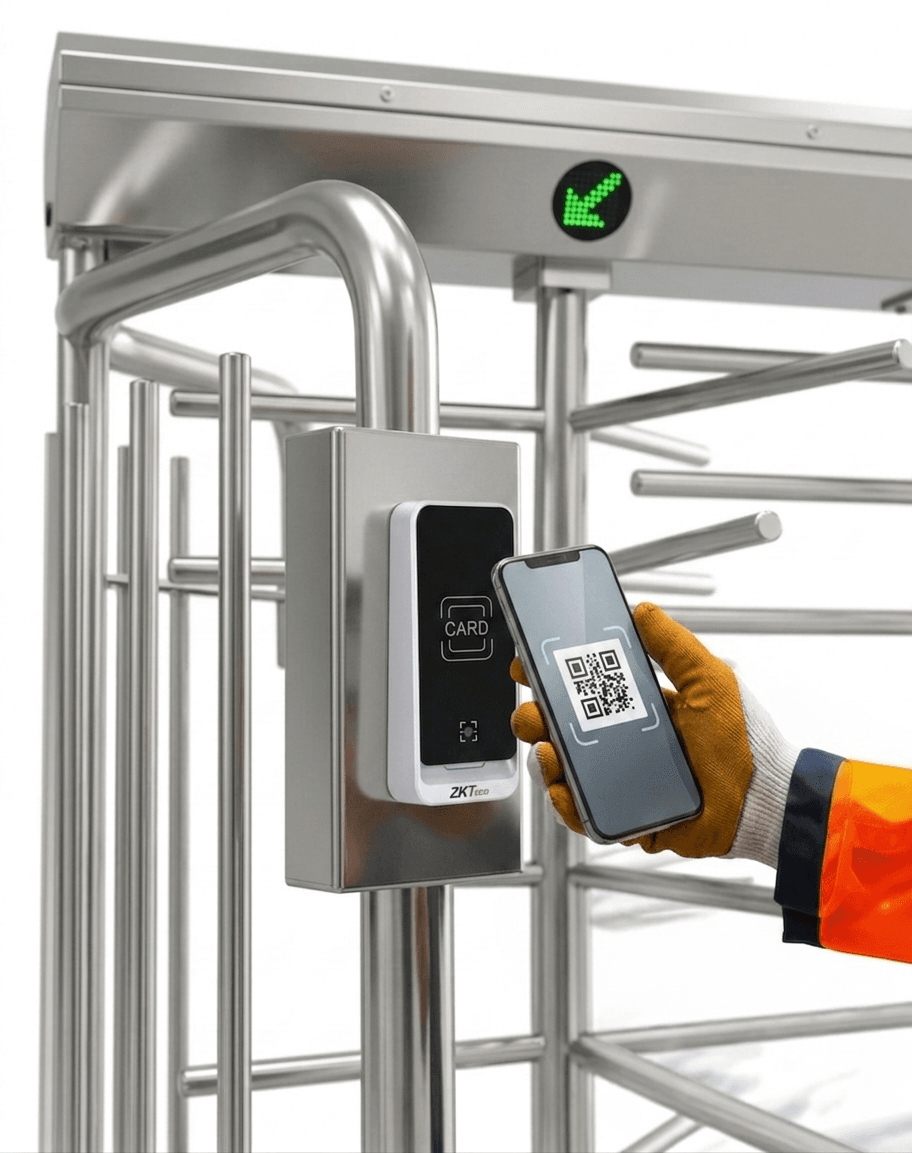
QR codes and mobile credentials are useful where temporary or digitally issued access is required, provided the access control platform and project process are designed around them.
They can work particularly well where different categories of workers, contractors or visitors need different access periods.
Construction companies often want one system to answer two different questions:
Who is allowed through the gate?
and
How long has that person worked?
Access control records provide useful entry and exit information, but that does not automatically make them a payroll-grade time and attendance system.
Where workforce time tracking is required, the access hardware can be combined with dedicated time and attendance software and reporting.
That reduces double handling while keeping access permissions and attendance rules properly managed as separate functions.
Access control and CCTV solve different problems.
Access control records which credential was used and whether entry was granted. CCTV provides the visual context around that event.
Cameras are particularly useful around:
Combining the two gives site managers better visibility than either system provides on its own.
For temporary sites without conventional infrastructure, camera placement, connectivity and power availability should be considered early in the project rather than added after security problems appear.
Large construction sites usually need to control vehicles as well as pedestrians.
Vehicle barriers can be combined with technologies such as long-range UHF RFID or ANPR licence plate recognition to manage approved vehicles entering a site.
Pedestrian and vehicle access should be planned together so workers are not forced to walk through vehicle entry lanes or around controlled pedestrian access points.
WorkSafe guidance places particular emphasis on managing the interaction between vehicles, workers, visitors and the public around worksites.
The hardware is only one part of the design. Before choosing a turnstile or reader, work through the following.
How many people need to enter during the busiest part of the day?
A site with hundreds of workers arriving at the same time needs a different entry design from a smaller project with occasional contractor access.
A secure turnstile achieves little if people can easily bypass it through an adjacent gap in the fence.
The controlled entrance needs to form part of the overall perimeter strategy.
Determine where power and network connectivity are available, and what should happen if connectivity is interrupted.
Depending on the access control architecture, local controllers may still make access decisions even when a remote software platform is temporarily unavailable.
Dust, rain, coastal salt exposure and general weather should all form part of product selection and installation planning.
Normal access control and emergency evacuation are different requirements.
The site needs a suitable emergency exit strategy rather than relying solely on the normal controlled entrance.
Consider whether the system needs to connect with existing access control, CCTV, visitor management, time and attendance, or other third-party systems.
Planning this early is much easier than trying to join separate systems together later.
One of the best examples of full-height turnstiles on a major New Zealand infrastructure project is the Watercare Central Interceptor in Auckland, delivered by Ghella Abergeldie JV.
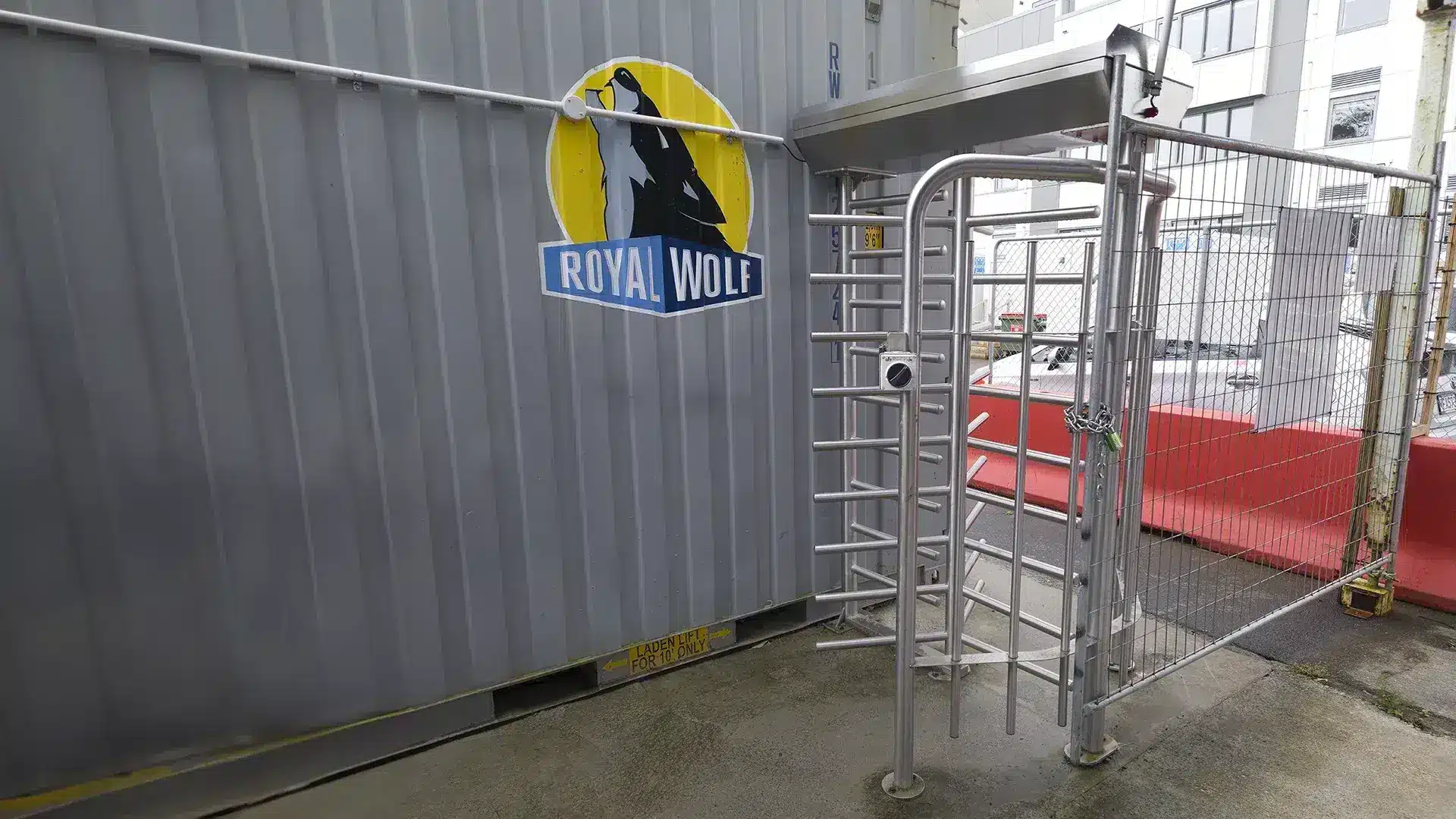
Seven ZKTeco FHT2300 full-height turnstiles were supplied for access points across the project, which covered a workforce of around 600 people spread over multiple Auckland sites.
Rather than forcing the project onto a completely separate access platform, the turnstiles were integrated with the project's existing third-party access control system.
For this project the client also requested an upgrade from the standard SUS304 stainless steel to SUS316, to suit the harsher environmental conditions on site. That is a good illustration of how a standard product can be adapted where the environment justifies it.
That point matters when planning a construction site. The physical turnstile, credential reader, access controller and management software do not all need to come from a single manufacturer. A well-designed system can use the most appropriate components for the project while maintaining central access control.
A small building site may only need good fencing, controlled gates and CCTV.
A larger commercial development may benefit from electronic contractor access and a controlled pedestrian entrance.
Large civil and infrastructure projects may need a more complete solution combining:
There is no benefit in installing a complicated system where a simpler one will do the job.
The objective is to build the security around the actual risks and workflow of the site.
Yes, selected models are designed for outdoor environments, but environmental exposure still needs to be considered carefully. The ZKTeco FHT2300 is IP54 rated, and shelter, drainage, electrical installation and corrosion exposure should all form part of the site design.
Often, yes. Turnstiles such as the ZKTeco FHT2300 can integrate with different access controllers, including supported third-party systems. Compatibility should be confirmed during system design.
Potentially. Access events can be combined with time and attendance software where required. Access control and payroll attendance rules are different functions, so the system should be configured specifically for both if accurate workforce reporting is needed.
Depending on the design, yes. Portable platforms, modular installations and relocatable equipment can make it possible to reuse parts of a system on future projects.
NZTeco supplies access control, full-height turnstiles, CCTV, time and attendance, and vehicle access solutions for New Zealand construction and infrastructure projects.
We can work with your security installer, integrator or project team to determine the most practical hardware and system architecture for the site.
If you are planning a new construction site entrance or upgrading an existing one, send us the site requirements and we can help work out the best approach.
From access control, time attendance and turnstiles to CCTV, smart locks, vehicle access, digital signage and automation, NZTeco helps match the right technology to the job.
Send us the details and we’ll help you work out the best next step.




We’re a Licensed Security Company!
NZTeco Limited is officially licensed under the Private Security Personnel Licensing Authority (PSPLA).
License Number: 24-121944
License Classes: Security Technician & Security Consultant
Expiry Date: 22-11-2029
What does this mean?
It confirms that we meet the legal standards to provide professional and secure services in New Zealand, ensuring your peace of mind and trust in our solutions.
Being licensed ensures compliance with industry regulations, ethical practices, and accountability in delivering Access Control, CCTV, and other security solutions.
For more about the PSPLA and why choosing a licensed provider matters, visit the official PSPLA information page: https://www.pspla.govt.nz/ (opens in a new tab).