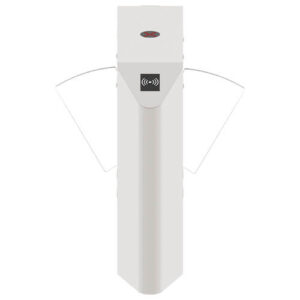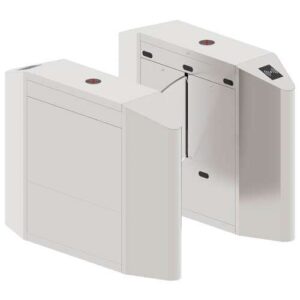

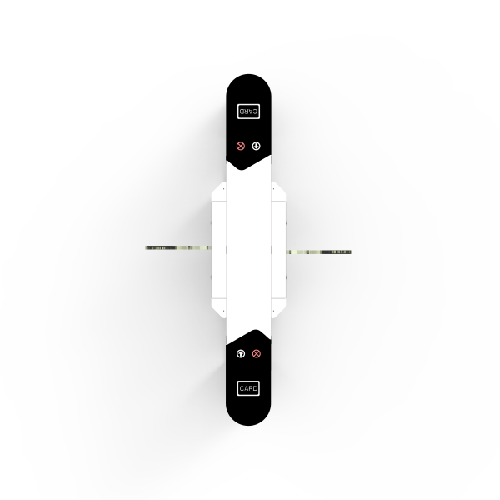


The ZKTeco FBL6200 Pro is the additional-lane unit for the FBL6000 Pro flap barrier system ? a slimline pedestal with retracting flaps on both sides, designed to sit between FBL6000 Pro masters to create multi-lane flap barrier rows. Same SUS304 cabinet, same modular reader bay, same touchless verification options. Cannot operate standalone.
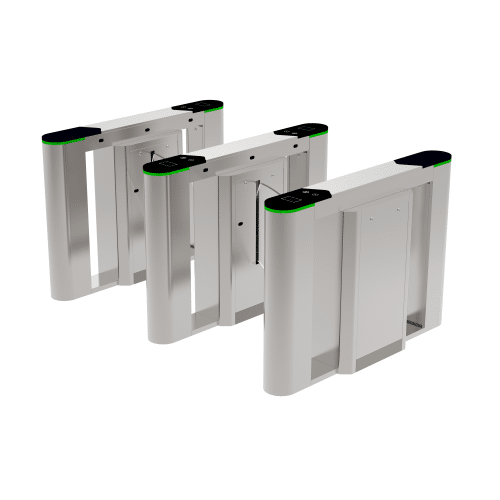
The FBL6200 Pro extends an FBL6000 Pro into a multi-lane row ? same expansion-pedestal architecture as the SBTL8200 (swing) and OP1200 (optical). FBL6000 Pro masters at the ends of the row, FBL6200 Pro pedestals between them, each pedestal carries flaps on both sides to create lanes between adjacent units.
Each pedestal in a flap barrier row carries retracting flaps on each side. Two FBL6000 Pro masters anchor the ends of the row; FBL6200 Pro expansion pedestals between them complete the additional lanes by providing flaps that close the gap with adjacent pedestals. A four-lane row needs 2 ? FBL6000 Pro plus 3 ? FBL6200 Pro ? five pedestals creating four parallel lanes. Visually identical from the public-facing side, with cost and procurement saving from using expansion units rather than full master cabinets.
| Feature | Specification |
|---|---|
| Power Requirements | 50 / 60Hz, AC 100 ~ 120V / 200 ~ 240V |
| Working Temperature | -28°C ~ 60°C |
| Working Humidity | 5% ~ 80% |
| Working Environment | Indoor/outdoor (if sheltered) |
| Speed of Throughput | Maximum 30 / minute |
| Lane Width (mm) | 600 |
| Dimensions (L*W*H) | 1400*300*1000mm |
| Dimension with Packing (L*W*H) | 1510*420*1230mm |
| Weight with Packing (kg) | 97 |
| LED indicator | Support |
| Cabinet Material | SUS304 Stainless Steel |
| Lid Material | SUS304 Stainless Steel + Acrylic |
| Barrier Material | Acrylic |
| Barrier Movement | Retracting |
| Emergency Mode | Support |


We’re a Licensed Security Company!
NZTeco Limited is officially licensed under the Private Security Personnel Licensing Authority (PSPLA).
License Number: 24-121944
License Classes: Security Technician & Security Consultant
Expiry Date: 22-11-2029
What does this mean?
It confirms that we meet the legal standards to provide professional and secure services in New Zealand, ensuring your peace of mind and trust in our solutions.
Being licensed ensures compliance with industry regulations, ethical practices, and accountability in delivering Access Control, CCTV, and other security solutions.
For more about the PSPLA and why choosing a licensed provider matters, visit the official PSPLA information page: https://www.pspla.govt.nz/ (opens in a new tab).